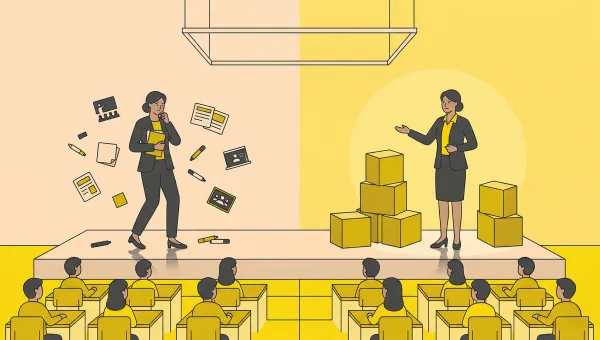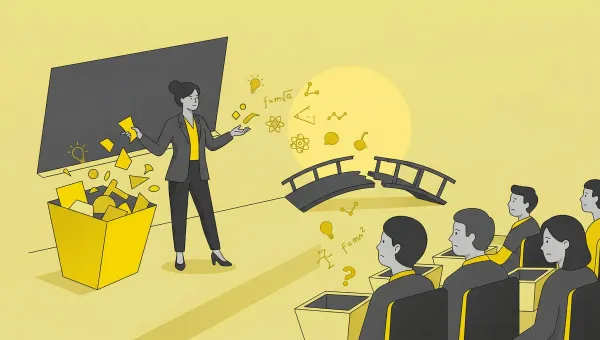
One of the most common paradoxes in the educational field is that some teachers who possess deep knowledge and strong specialization do not achieve the same level of success inside the classroom. A teacher may hold advanced degrees and possess rich scientific content, yet leave the classroom feeling that their students were not engaged and that real learning did not occur.
The real question here is not: Is the teacher good? But rather: Why doesn’t their distinction reflect on their students’ performance?
First: Confusing “Knowledge” with “Teaching”
A prominent reason is the belief that possessing knowledge means the ability to teach it. Knowledge is one thing; delivering it effectively is entirely different. A scientifically distinguished teacher may explain deeply but forget that the student does not have the same background, thinking style, or motivation. Real learning is the process of turning knowledge into shared understanding.
Second: Focusing on Content More Than the Learner
Some teachers enter the class thinking: “How will I explain the lesson?”, whereas the more important question should be: “How will students learn this lesson?”. The difference is fundamental. A content-focused teacher is eager to finish the curriculum and measures success by quantity, while an effective teacher monitors how students’ brains work and adapts the explanation based on interaction.
Third: Weak Classroom Interaction Management
Education is not a presentation—it is an interactive experience. Distinguished teachers may fall into the trap of continuous explanation without engaging students, leading to a loss of focus and turning the classroom into a silent, dull environment. Real learning happens when students ask, discuss, make mistakes, and correct them.
Fourth: Fear of Losing Control
Some teachers avoid interactive activities because they fear losing control of the class or causing chaos. However, the truth is that organized interaction does not weaken the teacher; it enhances their presence. A silent classroom is not proof of success; sometimes it is proof of the absence of learning, as discussed in our guide on common classroom management mistakes.
Fifth: Relying on a Single Teaching Style
Students are not identical; some learn by doing, some through discussion, and some prefer visuals and examples. A teacher who uses only one style loses a large portion of their students, no matter how strong their explanation is. Diversity in methods is the key to reaching every student.
How Does a Distinguished Teacher Become an Influential One?
The solution is not in increasing knowledge, but in redirecting it. Here is a simple practical framework:
- Start with the student, not the content: Ask yourself before class: What do my students know and what do they need?
- Design the lesson as an “experience”: Replace continuous explanation with a motivating question, followed by a brief explanation and practical application.
- Intentionally activate participation: Use open questions, short discussions, and group work.
- Monitor understanding during the class: Don’t wait for the test; ask yourself: Are the students actually understanding?
- Accept mistakes as part of learning: The ideal classroom is one where students learn from their errors.
Conclusion
Real distinction in education is measured not by what the teacher knows, but by the impact they leave on their students. The true transformation begins when you move from “I explain well” to “My students are learning effectively.”
If you aspire to turn your scientific expertise into a tangible classroom impact, join our specialized training programs designed to hone effective and inspirational teaching skills.