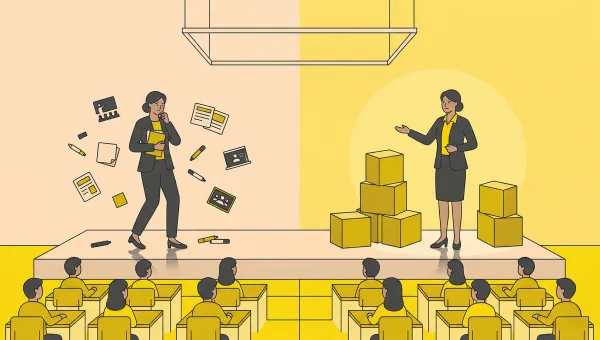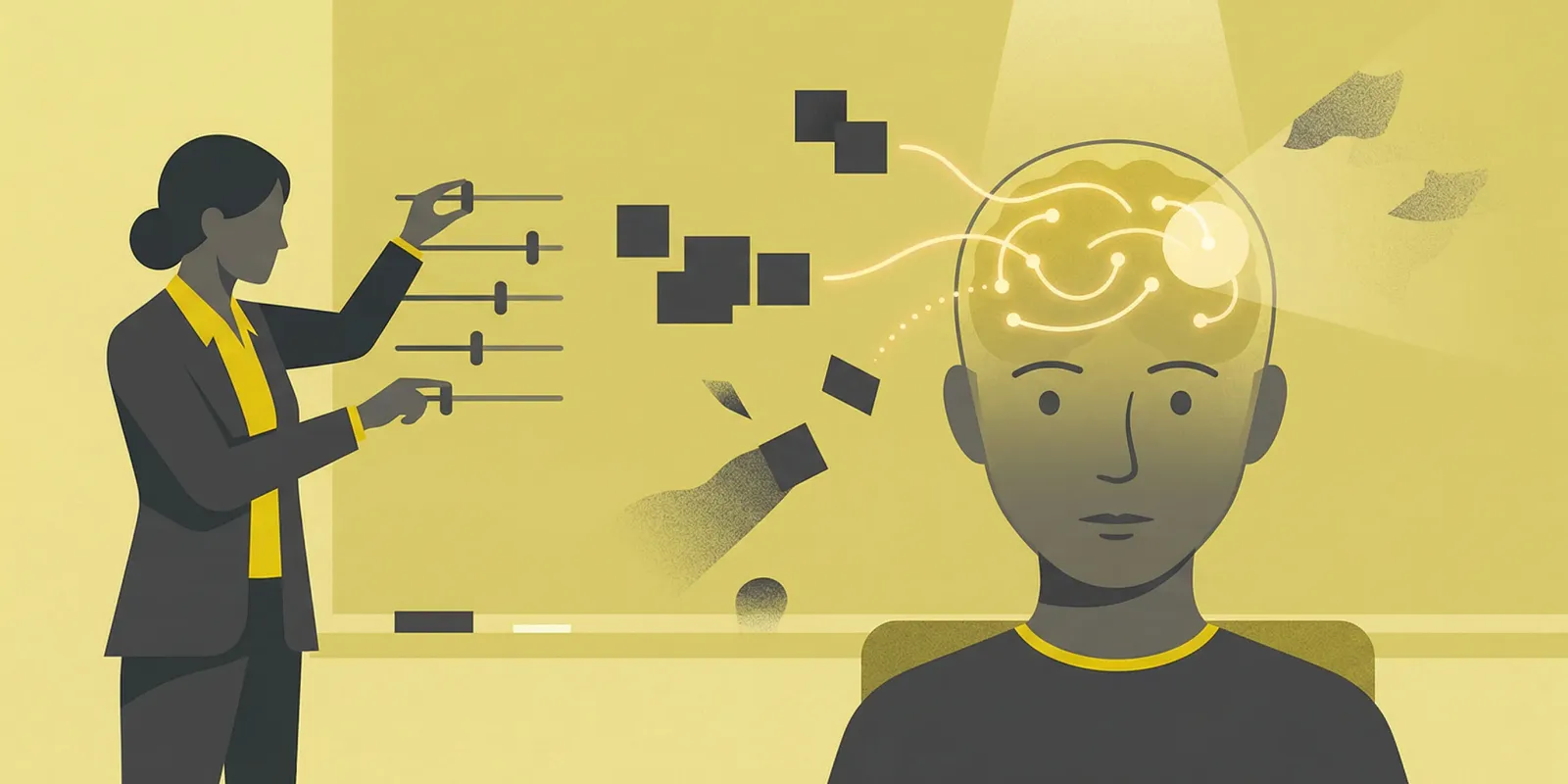
One of the biggest mistakes in education is treating the classroom lesson as merely “explanation time,” whereas the scientific truth is: The lesson is a complex mental process occurring inside the student’s brain, not just an external audition.
If a teacher does not understand how a student’s brain works, they are likely explaining in a way that is incompatible with the nature of learning and the speed of information processing.
First: The Student’s Brain is Not a Continuous Receiver
Throughout the school day, the brain does not maintain the same level of efficiency. Research in educational neuroscience shows that attention fluctuates every 10–15 minutes, and cognitive load accumulates, reducing processing capacity as information density increases.
Simply put: Students cannot maintain focus throughout the entire lesson… even if they strongly want to.
Second: Attention is the Gateway to Learning
Any information that does not pass through the gateway of attention is not learned. This introduces the critical concept of “Cognitive Load”; the brain has a limited capacity for processing information at any single moment. If a teacher provides long explanations and overwhelming amounts of information without segments, the result is distraction and loss of comprehension.
Third: Working Memory… The “Bottleneck”
During an explanation, students rely on what is called “Working Memory.” This memory is highly limited, holding only a few items at a time. If this memory becomes overloaded due to rapid explanation or distractions, learning stops immediately—even if the teacher continues talking.
Fourth: The Brain Needs “Processing” Periods, Not Just “Reception”
Many teachers explain non-stop throughout the lesson. However, scientifically, true learning happens when the student stops to think, connect, and apply. This is the hallmark of Active Learning. Students don’t learn because they heard; they learn because they “processed” what they heard.
Fifth: Emotions Affect Learning More Than We Expect
A student’s brain is not just a rational machine; it is emotional too. In cases of anxiety, fear, or pressure, the “Amygdala” activates, which can physically block the learning process. Conversely, in a safe and stimulating environment, the brain becomes fully prepared for understanding and memory.
How Should a Teacher Plan Based on This?
If we understand how the brain works, the lesson should not be built as a continuous lecture, but as follows:
- Motivating Start (3–5 minutes): A question, a scenario, or a short story to prime the brain and capture interest.
- Segmented Explanation (10–15 minutes max): One idea at a time, clear examples, and simplification without padding.
- Processing Pause: An open question or individual reflection that allows the brain to connect new information.
- Application Activity: A practice exercise or group work to transform knowledge into an actual skill.
- Smart Review: A quick summary or short quiz to solidify learning in long-term memory.
Crucial Summary
A teacher who doesn’t understand how a student’s brain works often explains in a way that is comfortable for them, but ineffective for the student. A professional teacher manages attention, balances explanation with interaction, and plans the lesson as an engaging mental journey.
Education is not what you say; it is what happens inside the student’s brain while you are saying it. Discover more brain-compatible strategies in our specialized training programs.